
But Will It Make a Difference?
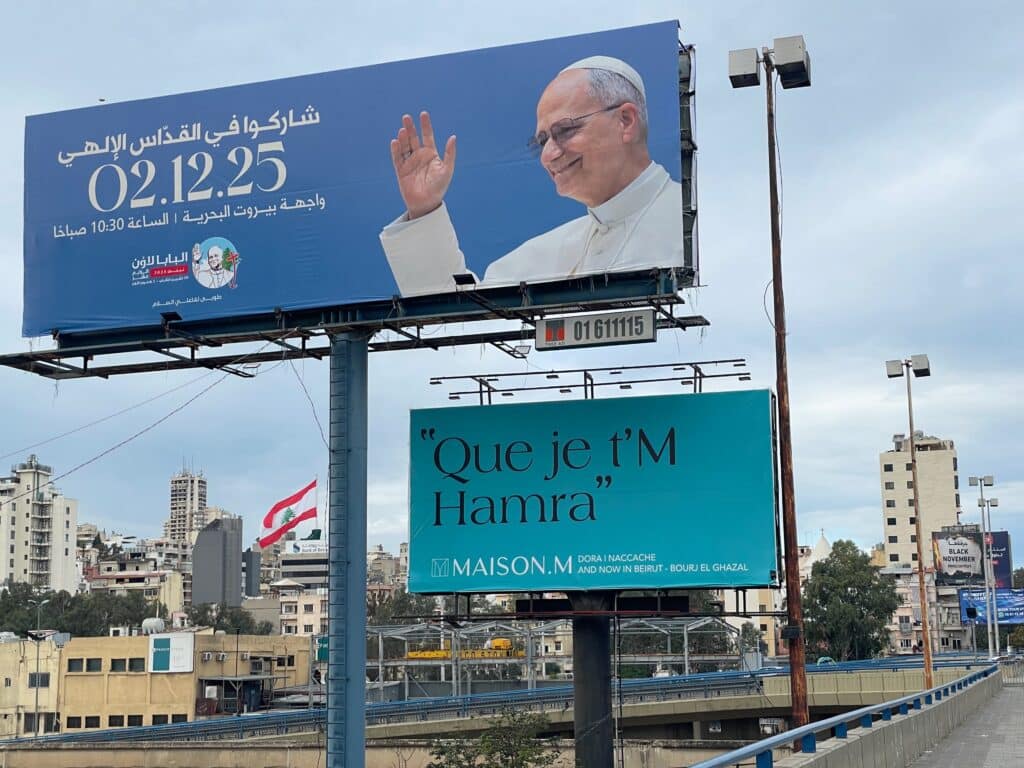
For several weeks in November an unusual air of excitement wafted through the air as the country realized that the rumors of Pope Leo XIV visiting Lebanon were true. The more optimistic among the population imagined that this visit would herald a complete cease-fire from the near daily Israeli bombings. Those more realistic surmised that the papal visit would merely bring a respite from drone and warplane attacks for the duration of his time in Lebanon. Nonetheless, there was a pervasive sense that, for a change, something positive would happen in Lebanon. It buoyed the spirits of much of the country, not unlike that of children awaiting the arrival of Papa Noël.
It seems that Lebanon – that is, the people of Lebanon, merely by virtue of residing in this land, are compelled to pass their days in the no-man’s land between anticipation and reconstruction. It might be anticipation of the outbreak of war, civil unrest, or terrorist attacks; or perhaps anticipating possible steps toward reform, accountability for criminal acts, or enforcement of equal treatment under the law. Some might envision environmental cleanup, or affordable food, housing and health care, or even the country putting the common good before self-interest.
And on the opposite border of this no-man’s land is reconstruction. This is something that Lebanese are constantly doing, or planning to do: spending emotional, mental and financial energies gathering the pieces of their lives torn apart by regional or international conflicts, internecine local struggles, or pervasively poor governance, reinforced with each election cycle. And when they attempt to rebuild their homes, villages and orchards, predictably the war machine grinds into action and destroys bulldozers and building equipment, preventing the Lebanese from recovery. At the same time, this “neighbor” is haunted by real or imagined threats, while they rebuild their homes, illegal settlements, watchtowers and walls, largely unmolested.
The Holy Father’s visit itself, from Nov. 30 to Dec. 2, 2025, came together smoothly, appearing to the casual observer to have been the result of months of planning. In reality, it came together in a matter of weeks, and it included meetings with Lebanon’s officialdom, a pilgrimage to the St. Charbel shrine, an interfaith gathering in the city center, a massive youth rally at the Maronite Patriarchate, a visit to a mental care facility, a prayer at the scene of the 2020 Beirut Port explosion, and an open-air mass for thousands at the Beirut seaside, in addition to private meetings. Pope Leo’s message was consistent in each instance: to highlight the people’s longing for peace with justice, calling people and leaders alike to play a positive role in making that peace a reality. It expressed the theme of his visit, namely, Jesus’ words “Blessed are the peacemakers” (Matt. 5.9). The Pope repeatedly, even scoldingly, stressed this to local and regional leaders: “Listen to the cry of your peoples, who are calling for peace!”
So, will leaders take up the challenge? Will they cooperate with each other for the sake of the people, and develop an ethos of service and trust? Will young Lebanese – Arab and Armenian, Christian and Muslim, villager and city-dweller, take the Pope’s challenge to them to heart and choose the hard path of staying in Lebanon, and be “artisans of peace”, active in changing the present culture of strife and selfishness to a culture of caring and constructive engagement? The country, along with the region, waits in anticipation of the outcome of the reflection to which the Pope called his audiences; translating thought into action.
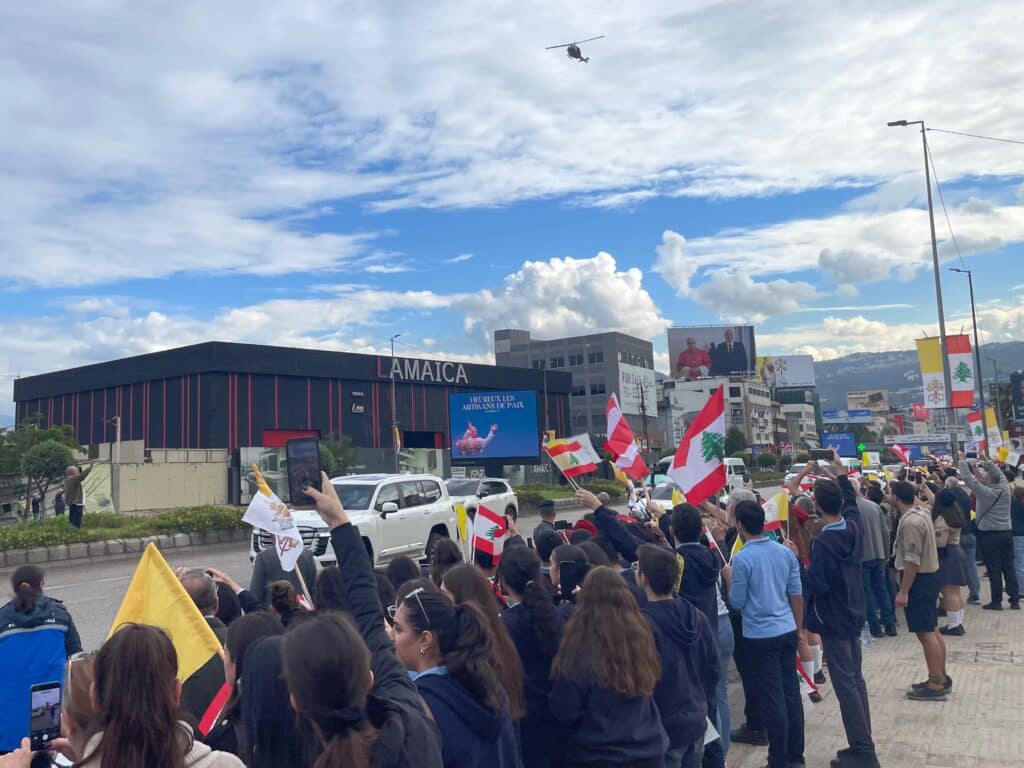
Pope Leo considered his visit to Turkey and Lebanon as efforts toward “religious diplomacy”, using his physical presence to express the moral authority of the Catholic Church in the pursuit of justice, mercy, and mutual acceptance for the good of all. In a world that is intoxicated with the pursuit of self-enrichment while malevolently nurturing a culture of destruction and oppression, it is up to the individual to become convinced of this call to be a peacemaker. It may not make a difference immediately, but it will grow in strength and influence as those individuals become a tribe and focus their influence to compel leaders to change.
When the people pray to God for deliverance from their sojourn of misery in this no-man’s land, they, knowingly or not, are appealing to God to change each human heart. As Ebenezer Elliott’s poem, “When Wilt Thou Save the People?” so plainly expressed, “From vice, oppression, and despair, God save the people!”
Cynically, within an hour of Pope Leo’s departure for Rome, drone overflights and bombing resumed. Peace would not come today, or this month, or even this year. So, we await with faith the transformation of this world, and we heed the Lord Jesus’ call to live as agents of peace, nurturing hope for the renewed earth that God has promised to the blessed peacemakers.
Written by Rev. Nishan Bakalian