
Treasures in Clay Doves and Jaguars
Bible text: 2 Corinthians 4:7-12
We are like clay jars in which this treasure is stored. The real power comes from God and not from us.
Global Ministries’ Vision
That all of God’s people and creation share in God’s abundant life.
In Mayan, there is one word for this vision: Lekil Kuxlejal. It means exactly the same thing. This way of seeing the world is at the core of Mayan Theology.
Global Ministries’ Mission Statement
To receive and share the Good News of Jesus Christ by joining with global and local partners to work for justice, reconciliation, and peace.
Global Ministries has had a long and fruitful relationship with the Institute for Intercultural Studies and Research in Chiapas, Mexico, whose mission is to contribute to the flourishing of Harmony-Shalom through different ways of knowing, spiritual paths, and spaces of dialogue.
Global Ministries’ Core Values:
- Presence: Manifesting God’s love by living in intentional, committed relationships.
- Justice: Living out God’s radical love by confronting powers that deny the fullness of life and the integrity of creation.
- Mutuality: Walking in hope with others in God’s mission.
- Community: building interdependence and unity among all God´s children.
- Peace: Embodying reconciling relationships with God, humanity and creation.
I want to share with you an experience that weaves together: Lekil Kuxlejal or abundant life, community, mutuality, justice, peace, presence and harmony. Let me tell you about Mary from the village of Amatenango del Valle.
PRESENCE Have you ever walked through a mud bank, where another layer sticks to your shoes with every step until your feet are almost too heavy to walk? When we arrived in Amatenango del Valle, the first thing we did after greeting Mary and her family was to start out along the path that leads to a swamp just outside of town where erosion and time have created a large deposit of clay. There are holes pocking the area right up to the trees that march down from the surrounding hillsides. Mary, with a quiet voice, explains: “Our mother and grandmothers have come to take clay from this deposit as far back as we can remember, way back to ancient times, before the Spaniards came to this land.” This clay is fine and soft, varying from a light reddish brown to dark red. Pots and clay utensils from this valley, the Amatenango, have been traded to other people groups all over Mexico and Guatemala for hundreds, maybe even thousands, of years.
,
AMATENANGO DEL VALLE: There is some debate about what its name means. Some say the Nahuatl or Aztec from the north who invaded this valley before the arrival of the Spaniards, called it the Walled place of papers. Amate is the paper the ancient peoples made from the bark of trees. No one knows how many thousands of folded amate books written by the original peoples of Mesoamerica were burned or destroyed by the Spaniards, but there are only a handful of codices left in museums around the world. The Amatenango valley was settled by the Maya Tseltal people many centuries before the Nahuatl and they say the name means either the house of the lord father painter, or the place of paper folded for the word. But the valley is not known for its paper today, but for its clay pots and figures, especially doves and jaguars.
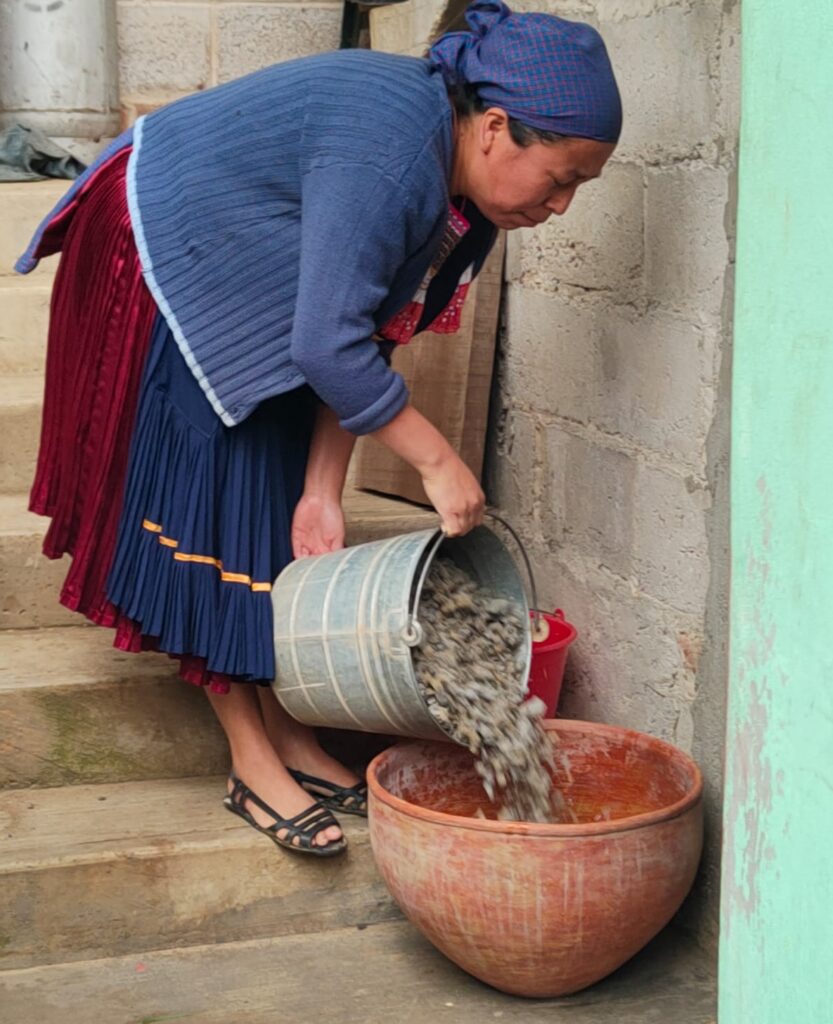
JUSTICE: The women of the community have fought long and hard to demand respect for the earth here: no machinery allowed for extracting the clay, no hoarding, and only the clay that will be used by local artisan families in the current year is to be removed. Mary explains the rituals, asking permission to take the clay from mother earth’s womb and the prayers of gratitude, which are carefully passed down from generation to generation. She tells us, “My mother always says never forget that mother earth provides as long as we maintain the harmony of care for creation.”
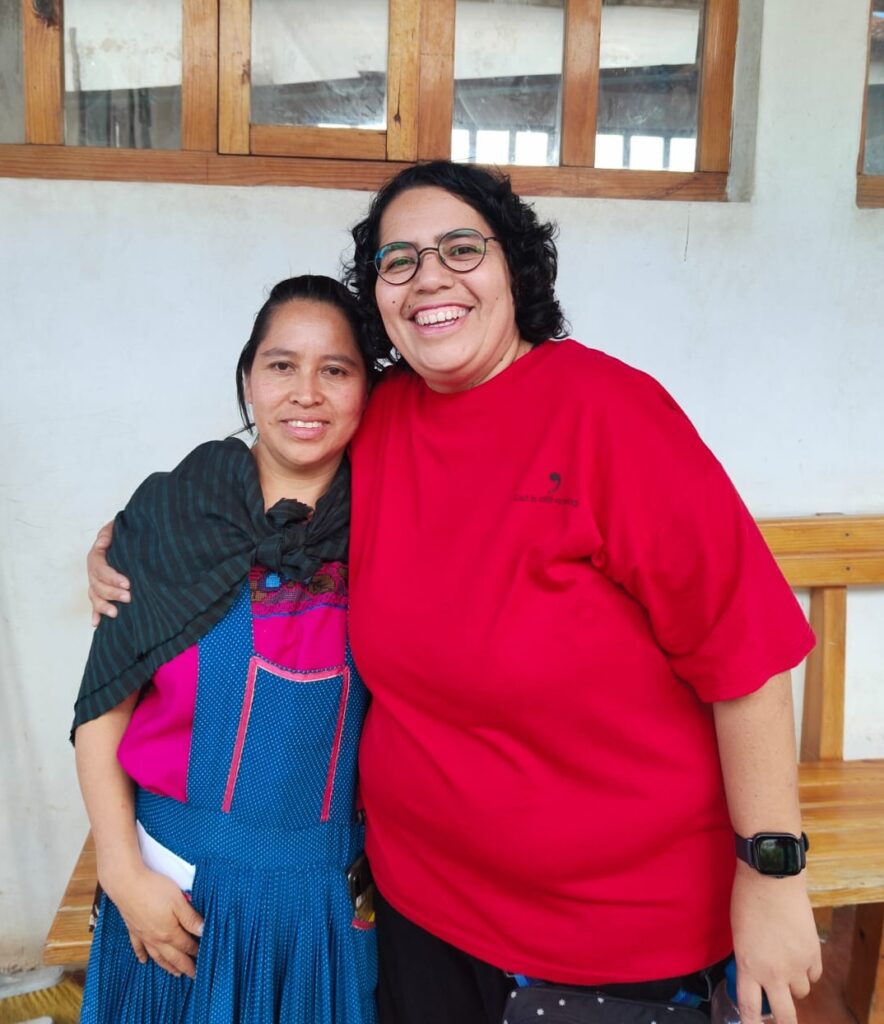
MUTUALITY: It was an unexpected invitation, a very long time in coming. After years of relationship building, Mary and the pastoral team of the Amatenango parish of the Catholic church, asked the Institute of Intercultural Studies and Research to train their youth leaders and then lead an activity for the 50 or so teenagers who had joined the confirmation classes. In Chiapas, this Mexican state where there are great and often violent divides between the Catholics, the variety of Protestant denominations, and followers of the original Mayan spirituality, attending an activity of another faith community is almost seen as entering the enemy camp. Half of the staff at the Institute is made up of Catholics and the other half protestants, but it happened that none of the Catholic staffers at the Institute were able to accept the invitation. So the facilitation team was made up of four rather nervous protestants, including me.
COMMUNITY: A group of elderly women sitting unobtrusively on a bench against the wall watched us as we began the evening training session with the 15 or so young leaders from the Amatenango Catholic Parish. The idea was to train the leadership team and the next day, accompany them as they put into practice what they had learned with the teenagers. One of the elderly women told us as we finished up the games, dances, stories and challenges around the theme of dignity, “We were here to watch and keep an eye on you and the activities. But we had so much fun watching! Sadly, we won’t be able to come to observe tomorrow because we have to go to a wedding. But we know this will be a wonderful experience for the young people of our parish! You are welcome here.”
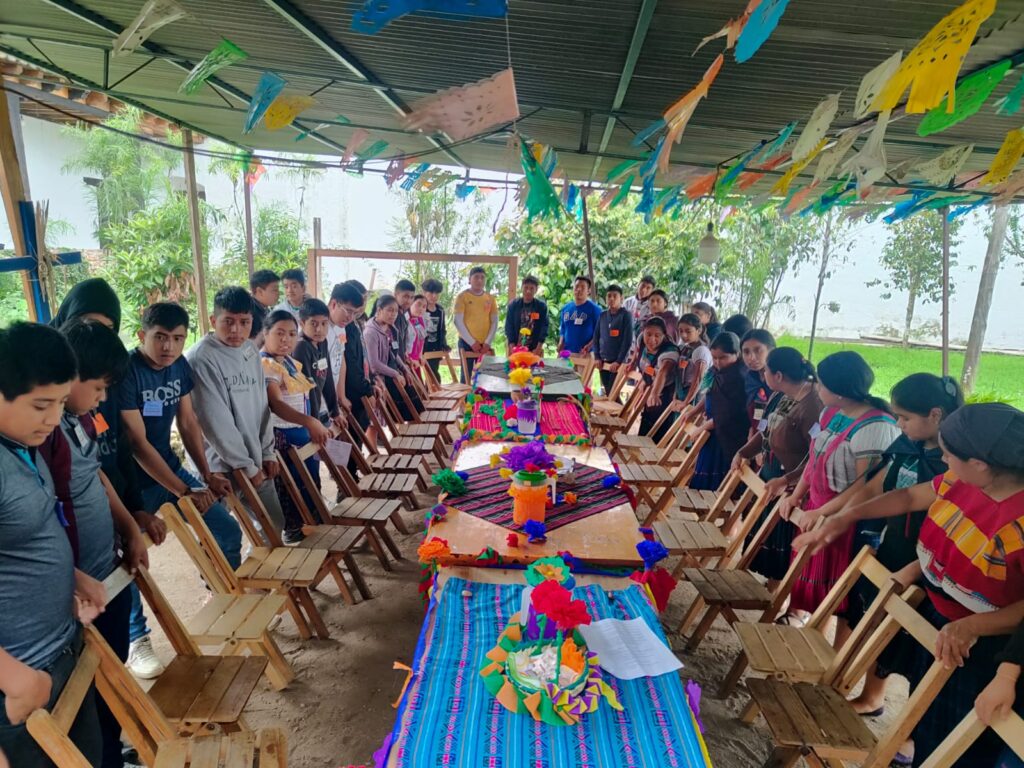
PEACE: Early the next morning, the parish teens began to arrive. Every single girl was dressed in the typical clothing that distinguishes the women from Amatenango from every other village in Chiapas: pleated skirts and aprons in brightly coordinated colors. The boys wore ordinary jeans and button down shirts. The main highway from Comitan (the fourth largest city in Chiapas) and San Cristóbal de las Casas splits the town of Amatenango del Valle in half. In the last five years, this highway has become a central artery for the trafficking of drugs, weapons and people from the Guatemalan border heading north. The cartels have begun attempts to recruit young people in all the villages along the highway and drugs have been introduced as a way to entice and capture new members. As the teens gather in a large circle in the parish hall, it is apparent that the efforts of the pastoral team to reach the younger generation is paying off. Mary has told us: “We want our teenagers to see the church is a safe haven, a place to have fun and learn, and to grow a sense of belonging and community.” Our newly trained leaders put into practice what they learned the evening before, teaching the principles of dignity with games, puzzles, dances, group challenges. In the final activity, the teens worked in teams to decorate and set a table where “all are welcomed,” and we sit down to share a meal together.
LEKIL KUXLEJAL: Abundant life
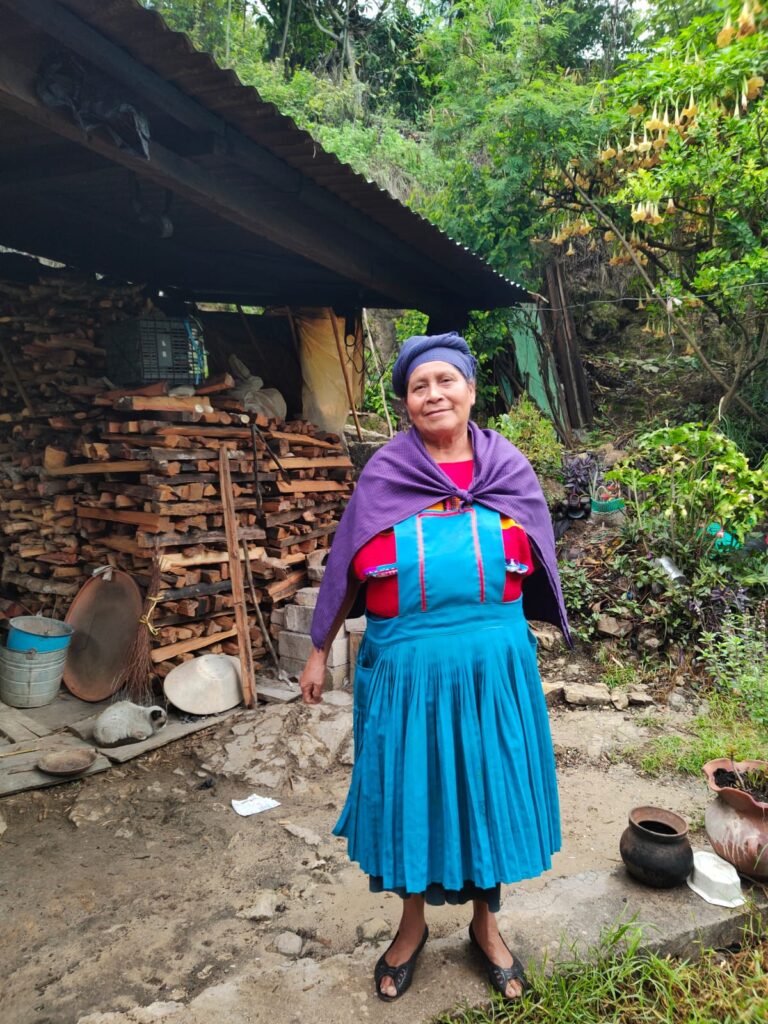
Mary invited us into her family, church and community. She is a very proud Mayan Tseltal woman who is deeply committed to her community in Amatenango del Valle. She is a potter, daughter and granddaughter of potters, a faithful member of the pastoral team of the Catholic Parish. Mary is the first in her family to finish high school and then college. She has a bachelor’s degree in Anthropology.
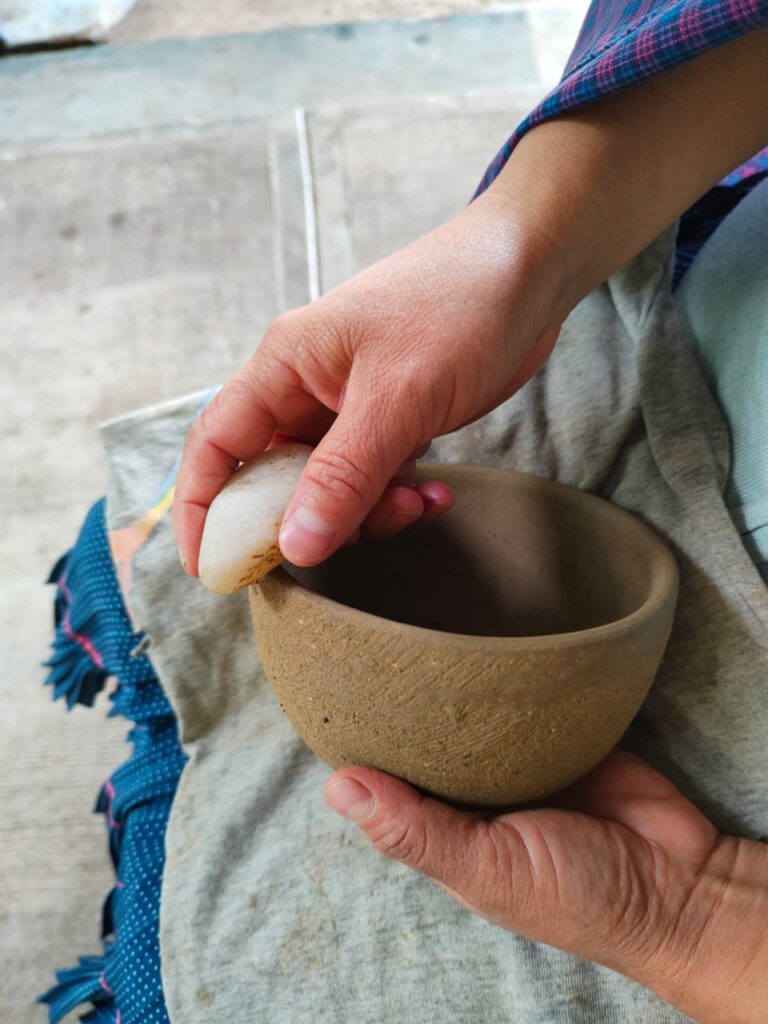
Mary takes the clay in her hands, ancient soils where pressure and time have pulverized the remains of plant and mineral matter to be mixed with water and create a soft, moldable, workable element. Like when Genesis speaks of our creation from the hand and breath of God, Mary is taking the same raw material, the earth itself, and making vessels both useful and artistic.
Mary works with her life, shaping her community, creating something new from imperfections, making something beautiful and useful even from broken vessels.
Mary affirms our call to memory and lament, promise and hope, not only for human beings, but for all of God’s creation. There is hardly a tragedy experienced by God’s people that does not also involve the land where they live. When people disobey, the earth—with its crops, natural cycles, wildlife, and clay deposits—is the first to suffer. We as “beings of body and blood, not only of spirit and soul,” must have a container where our bodies, spirits, and souls can live. God created a beautiful container, a fragile and perfect vessel. The earth, a vessel made of clay just like us, from the soils from which all life springs, has been cracked and broken by our actions and attitudes.
Mary speaks of harmony as the Mayan and the Christian way: where the balance of justice and peace, truth and mercy brings about Lekil Kuxlejal, the fullness of life. God’s creative handiwork expressed in our diversity, spiritual and cultural richness. In visiting Amatenango and listening to Mary, I learned that “Some of us are called to be doves, peacebuilders. Some of us are jaguars, fighting for justice. We all nurture lekil Kuxlejal, the fullness of life in peace with justice when we care for mother earth, respect the dignity of everyone young and old in our community, and reach out to weave relationships with kind hearted people from different faiths, languages and cultures. Some of us are doves, and some of us are jaguars, and God has places great treasures in each of these clay vessels.”
Elena Huegel serves with the Intercultural Research and Studies Institute (INESIN) in Mexico. Her appointment is made possible by your gifts to Disciples Mission Fund, Our Church’s Wider Mission, and your special gifts.