
Hope in the Midst of Trauma
In the midst of violence, grief, and uncertainty, hope can take root through compassion, faith, and community. In this story, Elena Huegel shares how the Roots in the Ruins program in Chiapas, Mexico, equips new facilitators to help individuals and communities navigate trauma, rebuild relationships, and find pathways toward healing and resilience.
At the Institute of Intercultural Studies and Research, Chiapas, Mexico
As we leave the airport in Mazatlán, a seaport on the Pacific Coast of the Mexican state of Sinaloa, and cross the city to the place where the facilitator training course for the Retoños en las ruinas: esperanza en el trauma (Roots in the ruins: hope in trauma) program will take place, 15 armored vehicles with riot police in full gear including dark face masks pass us. We count them as they go by, our eyes wide with apprehension. At nearly every major intersection, we spot more vehicles belonging to either the Mexican Army, special forces, federal police, state police or local police. “What is going on?” I ask brother Alfonso from the Congregational Church in Mazatlán.
He launches into his own analysis of the cartels and organized crime, the history of how US policy in Mexico and Sinaloa dating back to the second world war has affected the balance of power, and the current social, economic and political crisis in the state. “In other words,” he finishes, “we are in a war zone. This is the 16th of September holiday week (Mexico Independence day) and there are cruise ships and tourists scheduled to arrive, so the government is attempting to dissuade any attacks from or between the cartels with a full show of force. No one knows if this should make us feel safe or on edge that anything might happen.”
Once ensconced in the simple yet comfortable house and settling in to work on the course topics with participants and facilitators from the Christian Church (Disciples of Christ) and Congregational denominations in Mexico, we begin to unravel the complexities of personal, community, and social life under constant threat and explore how to accompany people in nurturing hope, dignity, resilience, justice, and healing in the midst of chaos and pain. As part of the training, each new facilitator chooses a target group, analyzing their needs with different tools, and then designing a six-hour interactive workshop.
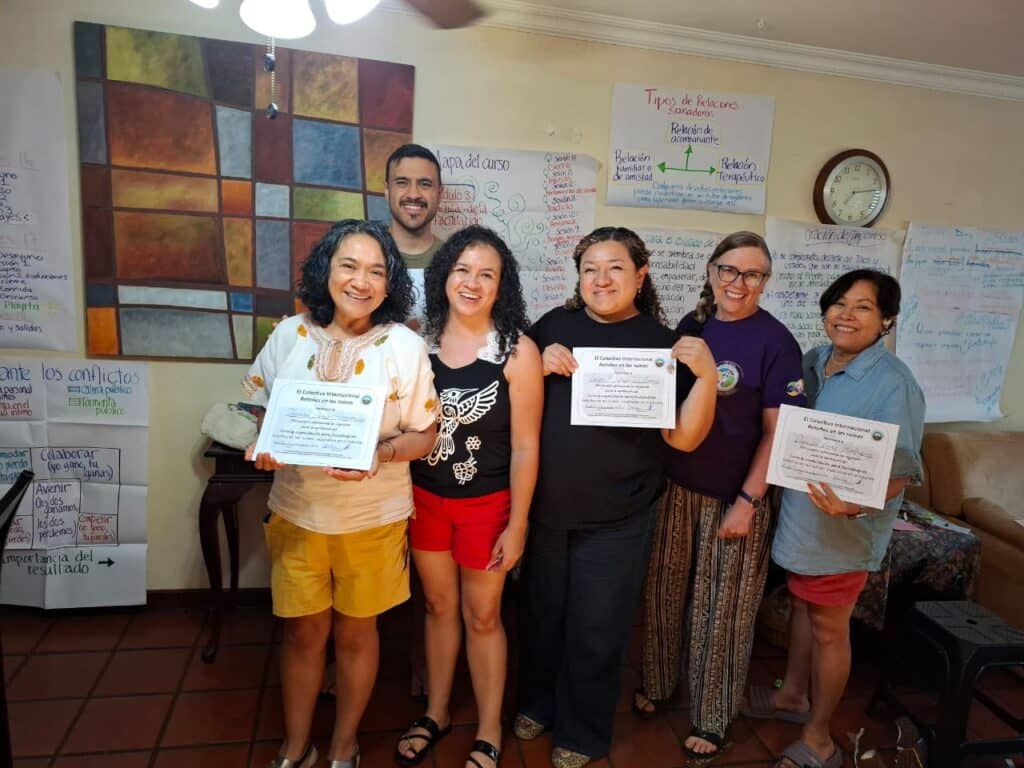
They practice pieces of their workshop design honing their facilitation skills as well as applying trauma healing principles while receiving feedback, ideas and encouragement from the other participants. Each of these future facilitators has already worked through four previous Roots in the Ruins courses: Roots in the ruins: basic introduction course, Conflict Transformation: Hope and Dignity, The Four Winds of Healing: Hope for Congregations and Communities, and The Odyssey from Victim to Wounded Healer: Hope for Individuals. To certify as Roots in the ruins facilitators, they must complete this facilitation course with its corresponding readings as well as organize, lead and evaluate a six-hour workshop with their target group.
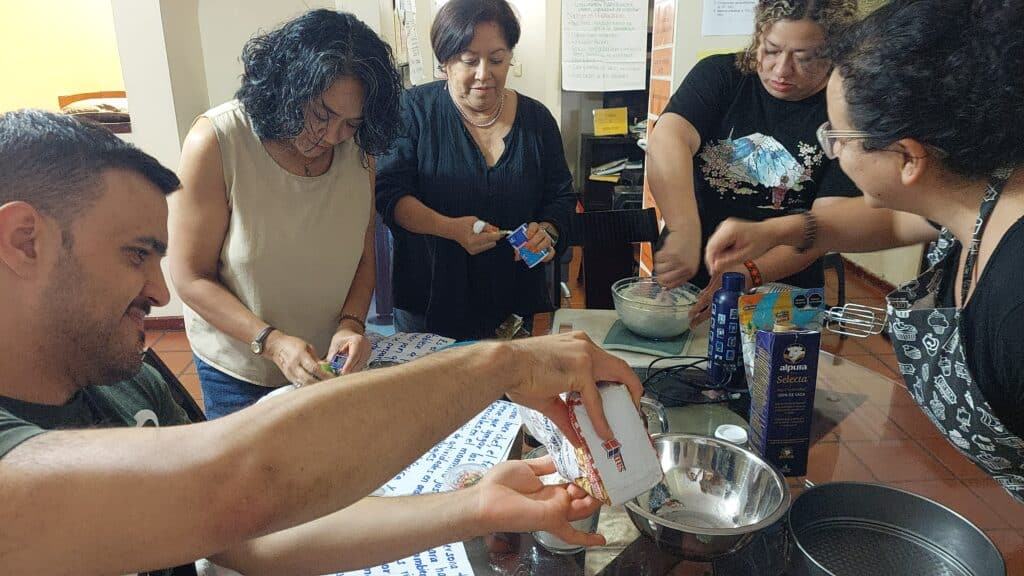
Tanya has decided that her workshop will take the form of a special dinner to heal a painful rupture in her family. She will bring her family together to remember and honor her grandparents with stories, pictures, and the flavors of their shared past. She will use the cooking skills her grandmother taught her to facilitate healing in her family. She hopes that no one in the family, even those who haven’t spoken to each other for years, will want to miss the banquet! Dina has designed six Sunday school lessons for the at-risk pre-teens in her inner city church.
She has taken the theme of “There is a hero or heroine in you” to teach resilience, dignity, and justice through Bible characters, games and songs. Tamara will be accompanying a rural family who recently lost a young son in a tragic accident. She is designing six hours of slow, tender, and flexible pauses depending on the path the grief process takes: a walk through the family garden, a cup of hot chocolate and mexican sweetbread while looking over the family photo album, a ritual to move from pain to gratitude and hope. Evan will be leading his coworkers at a hospice organization in several workshops to explore four questions: How do I need to care for myself? How can I care for others? How can I encourage others to care for themselves? How can I allow others to care for me?
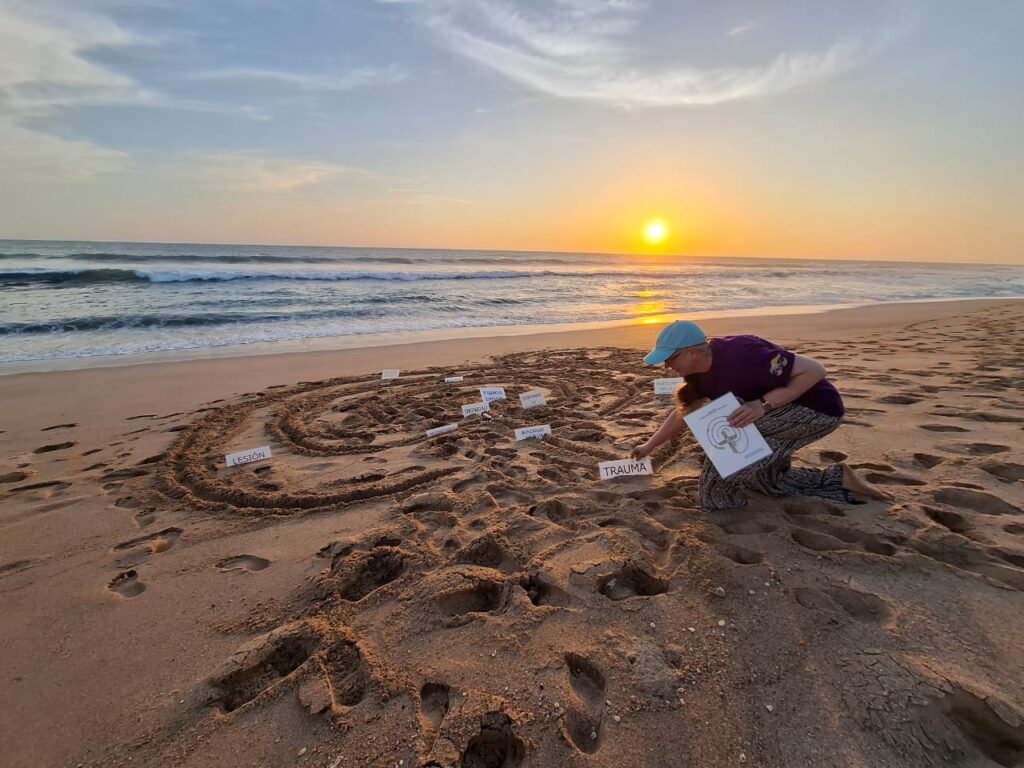
On our final evening together, after being locked inside the house for four days, we leave the air-conditioning to brave the 100+ degrees and 90% humidity and the protective bars on the windows and doors to venture out to the beach. We walk through a beautiful federally owned camp, with its security personnel, past the signs marking a turtle nest (wondering if the high temperatures will mean no turtles will hatch this fall) to the magical world of sand and water sparkling in the setting sun. We know that this week together has been a liminal space: the time of transformation and healing in between that which was and that which is yet to be. As we tell stories, write in our journals, and walk the labyrinth drawn in the sand, creation and companionship cradle us in harmony and connection. We experience peace as “faith makes us sure of what we hope for and gives us proof of what we cannot see.” (Hebrews 11:1)
Now back home, I send encouraging messages and pray that a family at dinner, a group of children in Sunday school, a grieving family and a team of hospice workers will experience hope in the midst of trauma through the gentle care of these new Roots in the Ruins facilitators.
By Elena Huegel