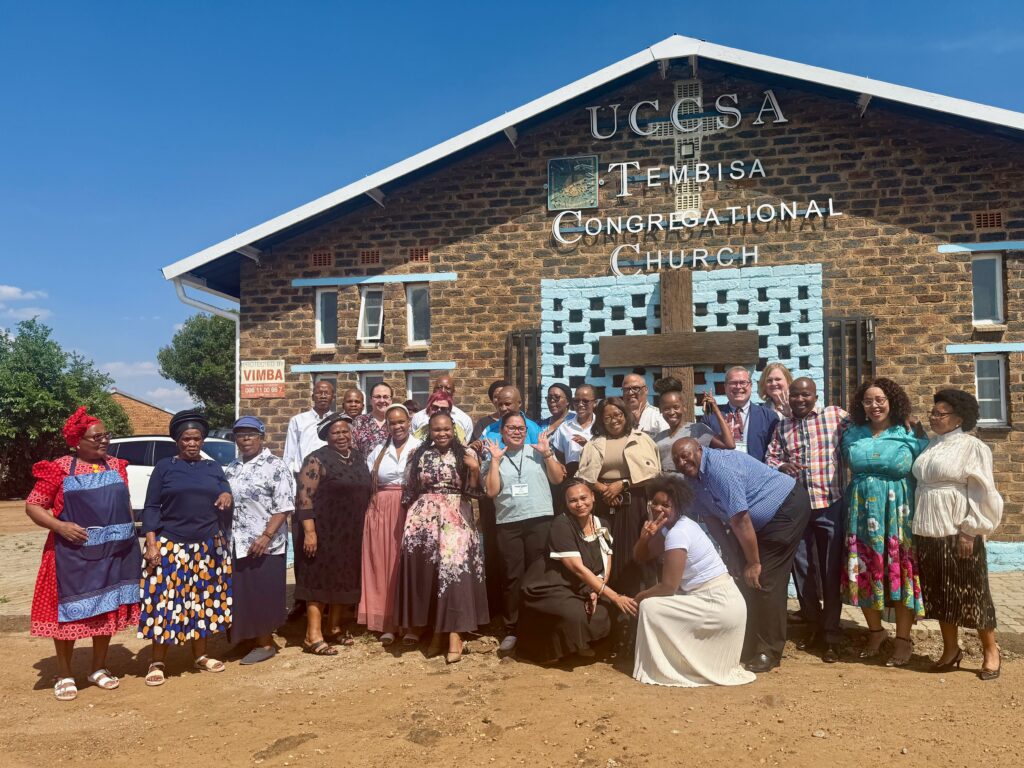
Day 3 of Global Ministries Gathering: Voices of Faith, Stories of Belonging
As part of the Global Ministries Cross-Regional Gathering in Johannesburg, South Africa, participants had the opportunity to step beyond the conference space to experience the life of local congregations. Attendees were divided into groups and sent to visit churches throughout the area, most visited congregations of the United Congregational Church of Southern Africa (UCCSA).
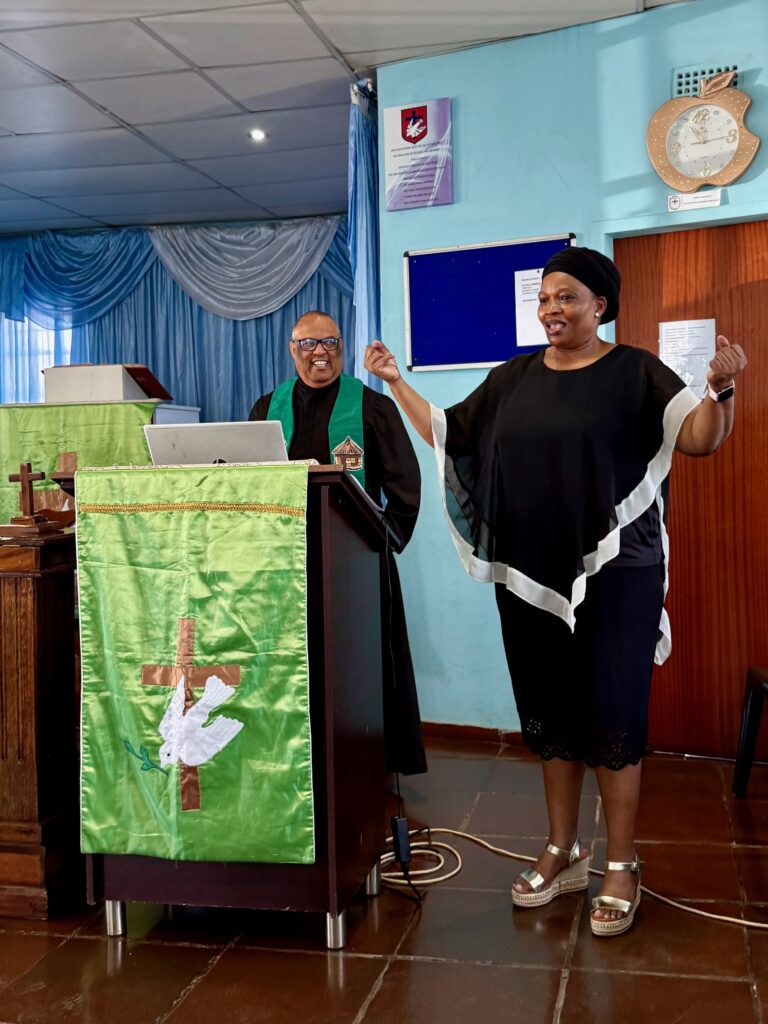
One group visited Tembisa Congregational Church, where they were welcomed with warm smiles, hugs, and handshakes. The church building was a simple brick structure, but the warmth inside was anything but ordinary. From the moment they arrived, the congregation made them feel less like visitors and more like guests among friends.
The groups joined their congregations for worship, which was vibrant and full of singing. At Tembisa Congregational Church, there were no musical instruments—only voices raised together in song. The sound was powerful, heartfelt, and deeply moving. One moment, in particular, will stay with one visitor: the congregation’s a capella singing of the Lord’s Prayer in the traditional African four-part harmony. In that moment, surrounded by voices united in prayer, the connections between all felt far greater than the differences in our cultures or the distance between our homes.
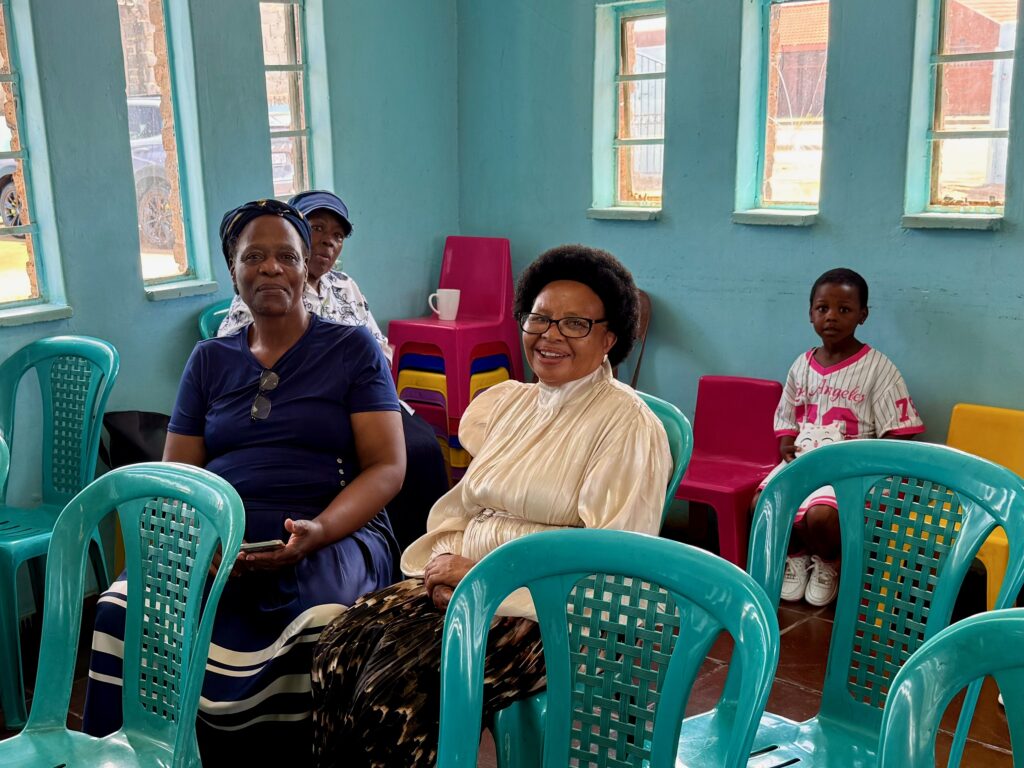
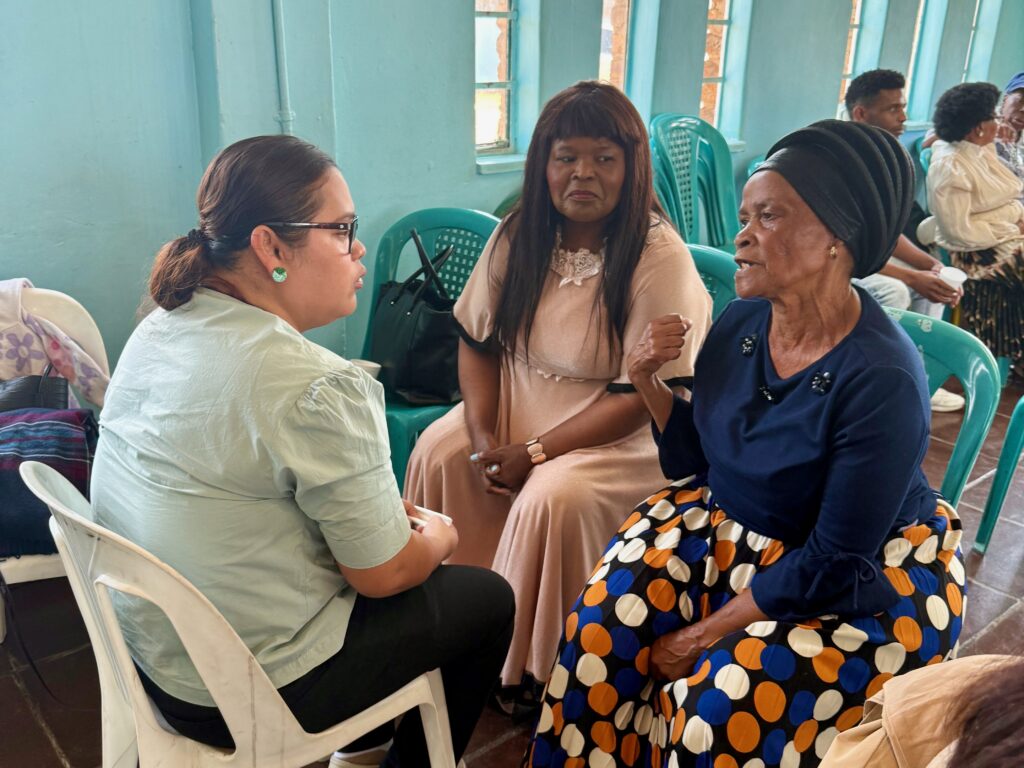
After worship, the groups spent time with the pastors and members of the congregations they visited, sharing conversation and learning about their experiences. The congregations hosted lunch for the visitors, continuing the conversations around the table. As the gathering explored identity, belonging, nationalism, and resistance, the visit offered an opportunity to consider how these themes shape people’s lives and the life of the church.
In South Africa, the legacy of apartheid continues to affect communities and the ways people experience society today. Conversations touched on the realities facing congregations, including concerns about funding and how to bring more young people into the life of the church.
That last concern struck a familiar chord. Although our histories and circumstances are different, congregations in the United States wrestle with many of the same questions. How do we engage younger generations? How do we sustain our ministries and ensure that our churches remain places where people find community, purpose, and faith? It was a reminder that, even across continents, churches can share challenges and learn from one another.
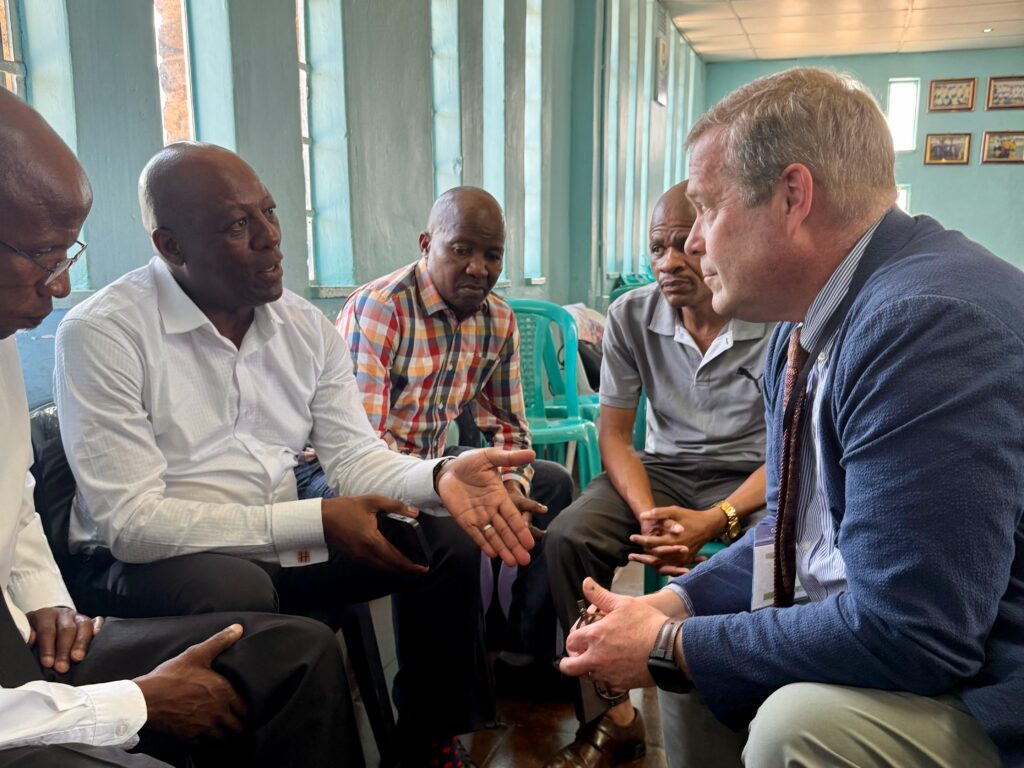
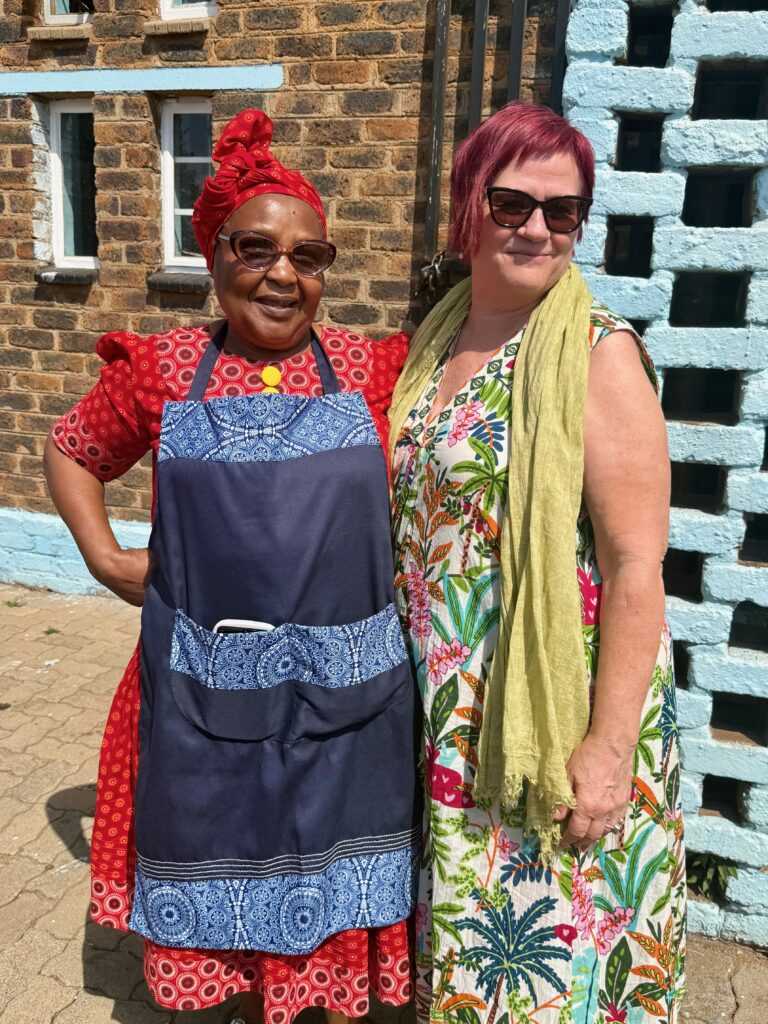
For many, the most memorable part was the congregations’ genuine warmth and hospitality. Before departing, many gathered for photographs, sharing laughter and enjoying one another’s company. Those moments of connection reminded all that belonging is not simply an idea to discuss in a gathering. It is created organically through the ways we welcome one another, listen to one another, and share our lives.
From the church visit to the gathering reflections
The afternoon reflections at the Cross-Regional Gathering brought many of these experiences into sharper focus. Participants were invited to consider what they had heard and experienced during conversations about identity, nationalism, resistance, and belonging—and what those conversations might require of the church.
Reflector Rev. Prof. Bosela Eale, a minister with the Disciples of Christ Community in the Democratic Republic of the Congo and a Global Ministries Mission co-worker with the All Africa Conference of Churches, explored the human desire to know where we come from, where we belong, and whether our identities are affirmed. He challenged participants to consider how we relate to people whose ethnicity, culture, or experiences differ from our own. While nationalism has played an important role in struggles against colonialism and the pursuit of independence, it can also become dangerous when it excludes, persecutes, or demeans others.
Eale reminded participants that our primary identity is as people of God, created in the image of God, with no race or ethnicity superior to another. The church, he emphasized, is called to create a community where identities are affirmed and marginalized people are welcomed and supported. When rules and systems violate justice and human dignity, the church must be willing to speak out.
His reflections also challenged participants to think about resistance in broader terms. Resistance can take the form of demonstrations, political engagement, and human rights campaigns, but it can also be expressed through music, art, language, and the preservation of cultural history. The most meaningful resistance, he suggested, is resistance that confronts oppression without becoming oppressive itself.
That message offered a powerful lens through which to consider both the South African and U.S. contexts. How can we celebrate our own identities without denying others the same freedom? How can we move beyond an “us versus them” mentality toward an understanding that we can be different and still share our common humanity?
Dr. Donna Bollinger, Minister for United Nations Advocacy with the United Church of Christ (USA), continued the conversation by inviting participants to reflect on what they had heard and whose voices might still be missing. She reminded participants that “Diversity is not the problem, exclusion is.” She challenged the group to consider how labels can obscure the humanity of individuals and how hearing someone’s name and story can change the way we see them.
Bollinger also reminded participants that, although we share the same world, we do not all experience it in the same way. Some people navigate life with considerable privilege, while others face enormous barriers to safety, opportunity, and basic necessities. Understanding those differences requires listening to people whose experiences are often left out of the conversation, including Indigenous communities and those struggling to secure their most basic needs.
One of her central challenges was to ask whose story is being told, and who benefits from the telling. The church must be willing to cross the room, listen to people with whom we disagree, and make space at the table for those who have been excluded. Following the example of Christ means extending that invitation even when doing so is uncomfortable.
Together, the reflections underscored an essential message: belonging cannot depend on excluding someone else. National identity, cultural pride, and a sense of community need not come at the expense of another person’s dignity. The challenge for the church is to create spaces where people can preserve what makes them unique while recognizing the humanity they share with others.
A shared calling
Visits to local congregations brought the gathering’s themes to life in a deeply personal way. Participants came together from different countries and contexts to explore questions of identity and belonging, but also experienced something that needed few words to explain.
Sometimes, connection comes through conversation. Sometimes, it comes around a shared meal. And sometimes, it comes through a song—voices rising together in a simple brick church, singing the Lord’s Prayer in four-part harmony.
The hospitality of the congregations visited reminded participants that belonging begins with how we treat one another. The afternoon reflections challenged them to consider how that welcome extends beyond our familiar communities to those whose identities, circumstances, or experiences differ from our own.
In a world where nationalism can deepen divisions and determine who is considered an insider or outsider, the church has an important role to play. We are called to listen, to stand alongside marginalized communities, to speak when human dignity is threatened, and to build communities where people are welcomed rather than turned away.
The time spent with local congregations in Johannesburg was an opportunity to learn from one another, recognize shared concerns, and reflect on the work still before all of us. It was also a reminder that the search for belonging is something we share—and that our faith calls us to make room for others to find it, too.